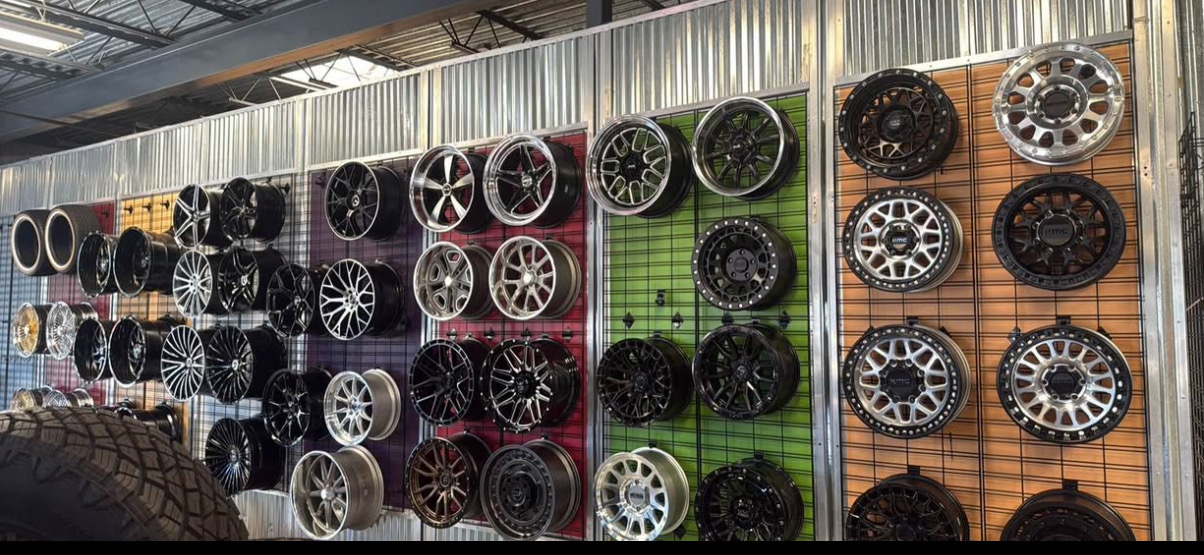
If you've ever stood in a tire shop staring at a wall of rubber wondering "what size tires fit my car," you're not alone. Walk in on any given Saturday at our Florin Rd location and I'll guarantee at least three people have pulled up Google on their phone trying to decode their sidewall. The good news: once you understand the system, tire sizing stops being confusing and starts being useful - useful enough to save you money and avoid fitment headaches. This guide covers everything from reading the sidewall code to calculating how upsizing affects your speedometer.
What Do the Numbers on My Tires Mean? (Reading the Sidewall)
Every tire sold in the United States carries a standardized size code on its sidewall. A typical passenger car tire reads something like 225/50R17 94V. Here's the breakdown:
- 225 - Section width in millimeters. This is how wide the tire is at its widest point, measured sidewall to sidewall.
- 50 - Aspect ratio. The sidewall height is 50% of the section width, so 50% of 225mm = 112.5mm of sidewall.
- R - Radial construction. Almost every consumer tire built today is radial.
- 17 - Rim diameter in inches. This must match your wheel exactly.
- 94 - Load index. The number maps to a maximum weight the tire can support - more on this in a moment.
- V - Speed rating. V means the tire is rated for sustained speeds up to 149 mph.
For a deep-dive on every element of that code - including the DOT date code and treadwear ratings - check out our full post on how to read tire size markings. What we're focused on here is how that code translates into whether a tire actually fits your vehicle and what happens when you change it.
Start With Your Door-Jamb Placard - The One Source of Truth
Before you start shopping, open your driver's door and look at the sticker on the door jamb or the door edge. Every vehicle manufactured for the US market is required to have one. That placard lists the OEM tire size, the recommended cold inflation pressure in PSI, and sometimes an alternate size if the manufacturer approved more than one option. This is your baseline. It is the size the engineers tested the car with, the size the brakes and ABS and speedometer were calibrated for, and the size that tells you what your wheels will accept.
If the placard is missing or damaged - common on older vehicles you see coming in from Rancho Cordova or the Natomas area that have been through a few owners - your next stop is the owner's manual, then a trusted fitment database. Our tire size calculator tool lets you enter your year, make, and model and pulls the OEM sizes instantly, along with commonly approved plus-size options.
What Size Tires Fit My Car? Plus-Sizing Explained
Plus-sizing means going to a larger wheel diameter while compensating with a lower-profile tire to keep the overall outside diameter (OD) roughly the same. The goal: keep the speedometer accurate and avoid rubbing, while fitting a wider, lower-profile tire that improves handling and looks better under the wheel arch.
Example: A 2021 Honda Accord Sport comes with 235/40R19 as standard. The overall diameter works out to approximately 27.3 inches. If you wanted to move to a 20-inch wheel (a +1 fitment), you'd look for a tire that keeps the OD in that same ballpark - something like a 245/35R20, which runs about 27.1 inches. That's within the acceptable 2-3% variance that keeps your speedometer reading correctly and doesn't stress the ABS or traction control calibration.
The practical limit on plus-sizing is usually the wheel arch and the strut clearance. On most daily-driven sedans and crossovers, +1 is comfortable and +2 is possible with careful fitment. Going to +3 or beyond without other modifications usually means rubbing on the liner or the strut tower on full lock. We see this regularly with customers who buy 22s for a Camry or a Charger without checking clearance first - then they're back with scraped tires and a frustrating repair bill. Use the fitment databases, or better yet, bring the car in before you buy the wheels.
Staggered Setups on RWD and Performance Cars
Staggered fitment means running a wider tire on the rear axle than the front - a common factory configuration on rear-wheel-drive performance cars. A BMW 5-series might come with 245/45R18 front and 275/40R18 rear from the factory. A Mustang GT500, a Dodge Challenger Scat Pack, a Corvette - all staggered from the factory.
The wider rear tire plants more rubber on the pavement for acceleration and stability under power. The narrower front is lighter and more responsive for steering. It's a genuine engineering decision, not just aesthetics.
The tradeoff: you cannot rotate a staggered setup in the traditional sense. You can only rotate side to side (dismounting and remounting the tire on the opposite side of the same axle), which helps with even wear but is more labor-intensive. Many owners of staggered setups just replace front and rear tires separately as each axle wears out. If you're buying tires for a staggered car and you want to be able to rotate normally, you'd need to move to a square setup - same size on all four corners. That's a conversation worth having with your shop before you commit to a wheel-and-tire package.
On AWD cars like a Subaru WRX or a Jeep Grand Cherokee, staggered setups get more complicated because a significant diameter difference between front and rear can stress the center differential. Generally, stick to square fitment on AWD vehicles unless the manufacturer specifically approves a staggered option.
Load Index: Why This Matters Most on Trucks and SUVs
The load index number on your tire maps to a published maximum load in pounds per tire. Here's a sample from the middle of the range:
| Load Index | Max Load (lbs per tire) |
|---|---|
| 91 | 1356 |
| 94 | 1477 |
| 97 | 1609 |
| 100 | 1764 |
| 104 | 1984 |
| 110 | 2337 |
| 116 | 2756 |
| 120 | 3086 |
| 126 | 3748 |
For a standard passenger car, the load index that came on the car from the factory is almost always appropriate for any replacement tire of the same size. But for trucks and SUVs - especially if you tow or haul - this number deserves attention. A half-ton pickup like an F-150 or a Ram 1500 has a maximum payload rating that assumes tires capable of supporting that load. If you downgrade to a lower load index tire to save money on a set of LT265/70R17s, you may be putting more weight on those tires than they're rated for when you have a bed full of pavers or a trailer hooked up heading down Highway 99.
LT-metric tires (the "LT" prefix you see on truck tires) typically have two load ratings: one for single-wheel mounting and one for dual-wheel mounting, which appears on the sidewall as "E" or "F" or similar. Most pickup trucks and SUVs use P-metric or LT-metric tires in single configuration, so match or exceed the OEM load index whenever you're buying replacements for a working truck. Our team at Tire Geeks services always flags this during fitment checks - it's not worth skimping on for a truck that actually hauls.
Speed Ratings: What the Letter After the Load Index Means
The speed rating letter tells you the maximum sustained speed the tire is designed for. The common ratings you'll see on passenger vehicles:
- S - 112 mph. Common on economy cars and older minivans.
- T - 118 mph. Standard family sedans, CUVs.
- H - 130 mph. Sport sedans, performance-oriented family cars.
- V - 149 mph. Entry-level sport tires.
- W - 168 mph. Ultra-high performance.
- Y - 186 mph. Max performance, exotic cars.
The rule is simple: never go below the speed rating specified for your vehicle. You can always go higher. If your BMW 330i came with H-rated tires and you want to put V-rated tires on it, that's fine. If you want to put S-rated tires on a vehicle rated for H, you're running a tire that wasn't engineered to handle the heat buildup at highway speeds your car is capable of. On a hot Sacramento summer day - we're talking 105F on the asphalt on I-5 through downtown in August - that matters more than it would in a mild climate. Tire compound heat resistance is real.
How Upsizing Affects Your Speedometer - and the Math Behind It
Your speedometer doesn't actually measure ground speed directly. It measures wheel rotation speed and multiplies by the tire's calculated circumference to arrive at a speed reading. When you change the tire's overall diameter, the circumference changes, and the speedometer reads differently than the actual speed.
The formula: Speedometer error % = ((New OD - OEM OD) / OEM OD) x 100
Real example: your car came with a 225/60R16 tire. The overall diameter on that tire is about 26.6 inches. You want to upsize to 235/60R16, which runs about 27.1 inches. The difference is 0.5 inches on a 26.6-inch baseline: (0.5 / 26.6) x 100 = 1.88% error. At a true 60 mph, your speedometer would read approximately 58.9 mph. That's close enough that most states' inspection tolerances won't flag it, and it won't affect your ABS or traction control in any meaningful way.
Now compare that to someone who goes from 235/65R17 (28.5 inches OD) to 285/70R17 (32.7 inches OD) without a recalibration - that's a 14.7% difference. At a true 60 mph, the speedometer shows about 51.3 mph. Your odometer is now logging about 14% fewer miles than you're actually driving, which affects your oil change intervals, warranty calculations, and your sense of how fast you're going on Watt Ave at night. A good shop can recalibrate the speedometer electronically on most modern vehicles. Don't skip that step when you make a significant size change.
Our tire size calculator tool computes this automatically - plug in your OEM size and your target size and it shows you the diameter difference, the speedometer deviation percentage, and flags whether you're in safe fitment range. It also links to our wheel offset guide if you're changing wheels at the same time, because offset affects how a wider tire sits inside the arch.
When to Upsize vs When to Stay Stock
Not every vehicle needs to upsize. Here's a straightforward way to think about it:
- Daily commuter, stock suspension, no performance goals: Stay with the OEM size. You'll get the handling the engineers intended, the best fuel economy for that tire footprint, and the widest selection of affordable options.
- Want better cornering and a more aggressive look: A +1 fitment with a lower aspect ratio tire often makes a noticeable difference in steering response. Common on sedans and sport hatches.
- Lifted truck or SUV: You'll need to upsize to fill the arch and avoid that "small tire" look. See our tire size reading guide for understanding LT vs P-metric sizing when you upsize for a lift. Fitment on lifted trucks has additional considerations around backspacing and overall height - our team handles a lot of this for customers coming in from Elk Grove and South Sacramento.
- Downsizing for winter tires: Going to a narrower, taller tire for a winter set (like a 215/60R16 steel wheel setup to replace 225/50R17 summers) is a legitimate strategy. Narrower tires cut through snow better. Just make sure the load index still meets spec.
Common Fitment Mistakes We See at the Shop
Working the counter at our Arden Way and Florin Rd locations, the same fitment mistakes come up over and over. Here are the ones that cost people money:
- Buying the wheel first, then figuring out the tire: Always confirm the full fitment - tire size, offset, backspacing, hub bore - before purchasing wheels. Wheels bought online that don't have the right backspacing for the vehicle's strut clearance are a common return problem.
- Mixing aspect ratios on AWD vehicles: If one tire is worn significantly more than the others on an AWD car and you replace just that one with a different size, you risk differential binding. Replace in sets of four or at minimum pairs on AWD.
- Ignoring load index when upsizing on trucks: Going to a visually identical LT tire in a larger size with a lower load index because it was cheaper. Check the number.
- Not accounting for wheel offset when widening tires: A wider tire may fit the diameter and width of the wheel, but if the offset isn't right, the tire can rub the inner fender liner or stick out past the fender. See our full wheel offset explanation before mixing wheels and tires.
Frequently Asked Questions
What size tires fit my car if I only know the wheel diameter?
Knowing the wheel diameter alone is not enough - you also need the width of the rim and the correct offset. The tire's rim diameter must match exactly (a 17-inch tire on a 17-inch wheel), and the tire width has to fall within the wheel's approved width range. A 225-width tire typically fits on a 7- to 8.5-inch-wide wheel. Check your door-jamb placard for the full OEM size, or use our tire size calculator tool at /blog/tire-size-calculator to look up your year, make, and model.
Can I put a wider tire on my car without changing the wheels?
Sometimes yes. If your current wheels have a wider approved mounting range than your OEM tire uses, you can move up one width increment (say, from 225 to 235) without rubbing issues on most vehicles. Going significantly wider - more than 20mm - usually requires checking clearance at the strut, the inner fender liner, and the outer arch. Bring the car in and we can check that before you buy anything.
Does tire size affect gas mileage?
Yes, in two ways. A larger overall diameter means each wheel rotation covers more distance, which can marginally improve highway fuel economy - your engine runs at lower RPM at the same road speed. But a wider or taller tire also increases rolling resistance and rotational mass, which hurts fuel economy in city driving. In Sacramento's mix of freeway commuting on Business 80 and stop-and-go on Howe Ave, the net effect on a moderate upsize is usually negligible - within 1-2% either direction.
What happens if I put the wrong size tires on my car?
Depends on how wrong. A minor size change (within 2-3% of OEM diameter) typically causes only a small speedometer error and no mechanical issues. A significant mismatch in diameter can cause ABS sensors to read incorrectly, traction control to activate at the wrong times, and on AWD vehicles can stress the transfer case and differentials. Tires that rub at full lock or over bumps will wear prematurely and can damage the fender liner. Always verify fitment before mounting.
How do I know if plus-sizing is right for my vehicle?
If your goals are better handling and a more aggressive look, plus-sizing is usually worth it on sporty sedans, coupes, and muscle cars. If your priority is ride comfort and low noise on I-5 commutes, a lower-profile tire will feel harsher over expansion joints and the railroad crossings on Florin Rd. If you haul or tow frequently, keeping a taller sidewall (higher aspect ratio) gives you more flex and load capacity. Talk through your driving priorities with us and we'll point you to the right size and compound.
Can I mix tire sizes front and rear on a non-staggered vehicle?
Not recommended. Mixing sizes on a vehicle that came square (same size on all four corners) will cause uneven braking forces, handling imbalance, and on AWD vehicles can mechanically damage the drivetrain over time. The exception is if you're running a matching staggered set where the stagger is within approved fitment parameters - and even then, you need to understand the rotation limitations. For most everyday vehicles, keep all four tires the same size.
Come In and Let Us Check Your Fitment
If you're still unsure what size tires fit your car after all of this, the fastest answer is to bring the vehicle in. Our team checks fitment every day at both locations - we have the databases, the experience, and the tools to tell you exactly what will work and what won't before you spend a dollar. We service customers from all over the Sacramento area: Elk Grove, Pocket, Arden-Arcade, Natomas, Rancho Cordova, Carmichael, Citrus Heights, and everywhere in between. You can also use our tire size calculator tool online to get a starting point for fitment before you call.
Need flexible financing for your tires or wheels? We offer lease-to-own through Acima with no traditional credit check, a roughly 60-second application, and a 90-day same-as-cash option. No penalty for paying it off early. It covers tires, wheels, lift kits, brakes - the whole setup.
Find us at our two Sacramento locations or contact us with your vehicle info and we will give you a straight answer on what fits. Walk in today - no appointment needed at either location.
- South Sacramento: 3020 Florin Rd - (916) 800-8786 - Mon-Sat 9 AM to 6 PM
- Arden Area: 2245 Arden Way - (916) 913-8786 - Mon-Sat 9 AM to 6 PM