How Much Does It Cost to Lift a Truck? The Real Numbers
I get this question at the counter almost every day at Tire Geeks. Someone rolls up on Florin Rd with a stock F-150 or Silverado and asks, "So how much does it cost to lift a truck?" The honest answer is: it depends on how high you want to go and what you want to do with the truck afterward. A 2-inch leveling kit and a 6-inch full suspension lift are completely different projects - different parts, different labor hours, different additional costs down the road. This guide breaks it all down so you know exactly what you are getting into before you commit a dime.
Lift Height vs. Cost: The Full Breakdown
Here is the complete picture at a glance. These ranges cover parts plus professional installation at a shop like ours. DIY can shave labor off, but we will talk about why that is often a false economy.
| Lift Height | Kit Type | Parts Cost | Labor Cost | Total Range | Common Add-ons |
|---|---|---|---|---|---|
| 1.5 - 2 inch | Leveling Kit | $80 - $250 | $100 - $250 | $200 - $500 | Alignment, tire upsizing optional |
| 3 - 4 inch | Suspension Lift | $800 - $1,800 | $600 - $1,200 | $1,500 - $3,000 | Alignment required, new tires common |
| 4 - 6 inch | Suspension Lift | $1,500 - $3,500 | $1,000 - $2,000 | $2,500 - $5,500 | Extended brake lines, longer shocks, alignment |
| 6 inch+ | Full Lift System | $2,000 - $5,000 | $1,000 - $3,000 | $3,000 - $8,000 | Driveshaft work, carrier bearing spacer, regear, alignment |
The 2-Inch Leveling Kit: Entry-Level Lift That Makes Sense
A leveling kit is not a "real" lift in the traditional sense - it just brings the front of the truck up to match the rear, removing the factory rake. Most half-ton trucks like the F-150, Silverado 1500, and Ram 1500 sit lower in the front from the factory. A 2-inch leveling spacer costs $80 to $200 for a decent kit from brands like Rough Country, ReadyLIFT, or Daystar. Installation takes about 1.5 to 2 hours. At our Florin Rd shop we see tons of these jobs, especially from guys who want to run slightly larger tires - a leveling kit alone on most trucks can clear up to a 33-inch tire without rubbing.
Total all-in with alignment: $300 to $500. That is the most cost-effective lift you can do. If you are on the fence, start here. You can always go bigger later.
The 3- to 4-Inch Suspension Lift: The Sweet Spot
This is where it gets real. A 3- to 4-inch suspension lift kit from brands like Rough Country, Fabtech, or BDS Suspension replaces the front struts or control arms and typically adds a rear block or leaf spring add-a-leaf. On a modern solid-axle truck or IFS truck, the suspension geometry changes meaningfully at this height - which is why you absolutely need an alignment after installation. Skip the alignment and you will eat through the inside edge of your tires inside of 10,000 miles. We have seen it happen to guys who went cheap down the street, then came to us with $800 in tire damage that was totally preventable.
A solid 3- to 4-inch lift on a half-ton runs $1,500 to $3,000 installed. Kits with better UCAs (upper control arms) land toward the top of that range but are worth it for geometry correction and long-term joint life. Brands like Icon and Bilstein are worth the premium if you drive the truck hard - Tahoe trips, the Sierra foothills, or anything unpaved.
The 6-Inch-Plus Lift: Big Results, Bigger Budget
Six inches and beyond is a full system. You are not just adding spacers - you are changing the suspension architecture. Kits from Rough Country, Fabtech, BDS, and Pro Comp in this range typically include new coilovers or replacement struts, new rear shocks, new control arms, and a whole list of hardware. Installation easily runs 6 to 10 hours of shop time on a modern truck with all the factory electronic suspension connections, brake line routing, and ABS sensor wiring you have to work around.
On top of the base kit, you need to budget for extended brake lines - your stock lines cannot reach with 6 inches of added drop-down. You also need longer rear shocks if they are not already included in the kit, and often a carrier bearing spacer or dropped carrier bracket on 4WD trucks to correct the driveshaft angle. Skip any of these and you get vibration, premature U-joint wear, or in the case of brake line tension, a genuine safety issue. We check all of this before we hand a truck back to a customer.
The Costs People Always Forget
The kit price is just the starting line. Here is where the real budget surprises happen:
New Tires
The whole reason most guys lift is to run bigger rubber. Going from a factory 265/70R17 to a 285/75R17 or 295/70R18 means new tires - period. Budget $800 to $1,600 for a set of four quality all-terrains from Falken Wildpeak, Cooper Discoverer AT3, or Toyo Open Country. Mud terrains from Nitto or BFGoodrich cost more. See our guide to the best lift kits for trucks for tire pairing recommendations by lift height.
New Wheels
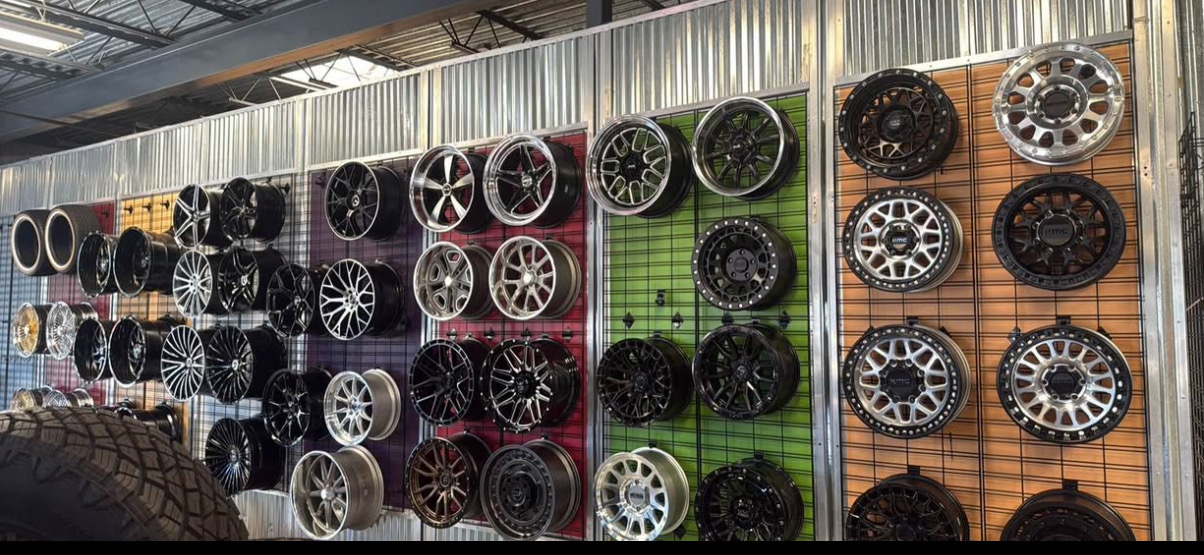
Your stock wheels might work with larger tires, but many customers upgrade to aftermarket wheels when they lift - both for clearance and because they want the look. A set of 18-inch or 20-inch method or Fuel wheels runs $800 to $2,000 depending on brand and finish. We carry a full wall of options at both locations.
Alignment
This is non-negotiable after any lift. Do not let anyone tell you otherwise. A proper 4-wheel alignment after a lift runs $100 to $150 at our shop. On an IFS truck lifted 4 inches or more, this is not just about tire wear - it is about keeping the truck driving straight on Business 80 or Highway 50 without fighting the wheel.
Extended Brake Lines
On lifts of 4 inches or more, stock brake lines often cannot travel the full range of suspension travel. Stainless braided extended brake lines cost $80 to $200 for a set and take about an hour to install. This is a safety item - not optional.
Longer Shocks
Some lift kits include new shocks, many do not. Aftermarket shocks from Bilstein (5100 or 6112 series) or Fox cost $250 to $600 for a set of four but make a dramatic difference in ride quality. If you are keeping your truck long-term or hauling/towing, do not cheap out on shocks.
Driveshaft and Carrier Bearing Spacer
At 6 inches and above on 4WD trucks, the front driveshaft angles become steep enough to cause vibration and accelerated U-joint wear. A carrier bearing drop kit runs $100 to $200. Custom driveshaft work - if needed - can run $400 to $800. This is one of those costs that sneaks up on people who buy a kit online and have a general shop install it without understanding the geometry implications.
Gear Regear for Big Tire Builds
If you go from a 265 to a 35-inch or 37-inch tire, your effective gear ratio changes. The truck feels sluggish, MPG drops, and the transmission works harder. Regearing the front and rear axles back to an appropriate ratio (say, from 3.73s to 4.56s on a big tire build) costs $1,200 to $2,500 depending on axle type. This is a project for serious builds where you are running 35s or bigger full-time, including guys who take their Tacoma or F-250 out to the Rubicon Trail.
Speedometer Recalibration
Larger tires mean your speedometer reads low - sometimes 5 to 8 mph slow at highway speeds. On modern trucks this is handled through a programmer or tuner (DiabloSport, Hypertech, or dealer reprogramming), which costs $150 to $350. On older trucks there are mechanical speedometer gears that can be swapped. Either way, your odometer and speedometer are both wrong until you address this.
Why Cheap Installs Cost More Long-Term
We see the aftermath of bad lift installs regularly - trucks that were done at a general mechanic shop or improperly installed with a kit bought from a big-box store. The most common consequences:
- Premature tire wear: Inner or outer edge wear from uncorrected camber and toe. A $120 alignment skipped becomes a $1,000 tire replacement in 15,000 miles.
- Ball joint and control arm failure: Running incorrect geometry hammers ball joints and tie rod ends. These fail faster, and a failed ball joint is a dangerous situation - not just an inconvenience.
- Death wobble: This is a real thing on older solid-axle trucks like the 80s-90s F-250 and older Jeep XJ. It happens when worn steering components meet misaligned geometry. Terrifying at 60 mph on I-5 through town.
- Vibration above 55 mph: Usually a driveshaft angle issue from skipping the carrier bearing correction.
- Brake failure potential: Overtaxed or poorly routed stock brake lines that kink or crack under flex.
A professionally installed lift with proper geometry correction, alignment, and all the supporting components costs more up front and saves you significantly more in the long run. Check out our overview of leveling kit installation in Sacramento and the comparison at leveling kit vs lift kit to understand the full picture before committing.
Financing Your Lift Build Through Acima
A full lift build - kit, tires, wheels, alignment, all the supporting parts - can easily run $3,000 to $6,000 on a serious half-ton build. That is real money, and we understand not everyone has it sitting in checking. That is why we offer financing through Acima at both locations. Acima is lease-to-own with no traditional credit check - the application takes about 60 seconds, and you can get approved in minutes. There is a 90-day same-as-cash option if you pay it off early, and no penalty for early payoff.
Acima finances the whole build through us - the lift kit, the tires, the wheels, the alignment, all at once. You do not have to piece together separate loans. Get started through our financing page or just come in and ask us about it at either location. It is the same application at both shops.
You can also learn more about our no credit check tire and wheel financing in Sacramento to see how it works before you walk in.
What Our Lift Installation Process Looks Like
When you bring a truck to us for a lift, here is what actually happens. First we look at the truck and talk about your goals - trail use, daily driving, towing, looks. That determines what kit makes sense and what additional work is required. We look at factory tire clearance, current suspension wear, brake line routing, and any existing modifications that might affect the install.
We then source the right kit - we work with Rough Country, Fabtech, BDS, ReadyLIFT, Bilstein, Fox, Icon, and others. We install everything ourselves, no farming out. After installation we put the truck on the alignment rack and get it back into spec. We test drive it before we call you. If something is not right, we sort it out before the truck leaves. View our full lift kit and suspension services to see everything we do.
Frequently Asked Questions
How much does it cost to lift a truck 2 inches?
A 2-inch leveling kit costs $200 to $500 all-in at a shop in Sacramento, including parts and labor. Kits themselves run $80 to $250 depending on brand. Add a $100 to $150 alignment and you are looking at $300 to $500 total. This is the most affordable lift option and works well on F-150s, Silverados, Rams, and Tacomas to level the front and fit slightly larger tires.
How much does a 4-inch lift cost installed?
A 4-inch suspension lift installed at a shop runs $1,800 to $3,500 depending on the truck, the kit brand, and whether you need additional work like extended brake lines or upper control arm upgrades. A mid-tier kit from Rough Country or ReadyLIFT on a half-ton runs closer to $1,800 to $2,500 installed. Premium kits with geometry-correcting upper control arms from BDS or Icon push toward the top of that range but last significantly longer under hard use.
Can I lift my truck myself to save money?
You can install a leveling kit yourself if you are comfortable with basic suspension work and have a proper lift, torque wrench, and spring compressor. It is not beginner territory. A full suspension lift is significantly more involved - brake line rerouting, coilover adjustment, driveshaft angles. The bigger issue is that skipping an alignment after any lift costs more in tire wear within months than you saved on labor. If you are going to DIY the install, still bring it to a shop for a proper 4-wheel alignment immediately after.
Does lifting a truck affect gas mileage?
Yes, lifting a truck affects fuel economy - primarily because of larger, heavier, more aggressive tires rather than the lift itself. Switching from stock 265/70R17 tires to 285/75R17 all-terrains can drop MPG by 1 to 3 miles per gallon. Going to 35-inch or 37-inch mud terrains without regearing can drop 3 to 5 MPG. Aerodynamic drag increases with lift height as well. If fuel economy matters to you, stay closer to 2 to 3 inches of lift with all-terrain tires rather than mud terrains.
Do I need new tires when I lift my truck?
Not always for a leveling kit - many trucks can run stock tires or go up one size with just a 2-inch level. For a 4-inch or greater suspension lift, you almost always want to run larger tires or you lose some of the visual and functional point of the lift. The new tires are also where a lot of the cost is in a full build. We can advise you on exactly what fits your specific truck at whatever lift height you are targeting - bring it in and we will measure it up.
How long does a lift kit installation take?
A leveling kit takes 1.5 to 2 hours including alignment. A 3- to 4-inch suspension lift takes 4 to 6 hours on most trucks. A 6-inch-plus lift with all supporting components - extended brake lines, carrier bearing, shocks, alignment - can take a full day or longer on complex trucks with electronic suspension systems or air suspension. We always give you a realistic time estimate before we start and call you before adding any work you did not authorize.
Get Your Lift Kit Installed at Tire Geeks
Whether you are looking at a simple leveling kit or a full 6-inch suspension build with new 35s, our technicians at both Sacramento locations have you covered. We install lift kits on F-150s, Silverados, Rams, Tundras, Tacomas, Colorados, and everything in between - from daily drivers in Natomas and Rancho Cordova to weekend trail rigs heading toward the Sierra or the Rubicon.
Stop by our South Sacramento location at 3020 Florin Rd, (916) 800-8786 or our Arden area location at 2245 Arden Way, (916) 913-8786. Walk in today - no appointment needed. We are open Monday through Saturday, 9 AM to 6 PM. If you want to talk through your build before coming in, give us a call or reach out through our contact page. You can also see both locations for directions and hours.
Ready to finance the whole build? Our Acima lease-to-own program has you covered with no traditional credit check and a 60-second application. Ask us about it when you walk in - we do the whole application in the shop.